
Loading...
Serving Garden Grove, CA and surrounding areas. (657) 722-4016
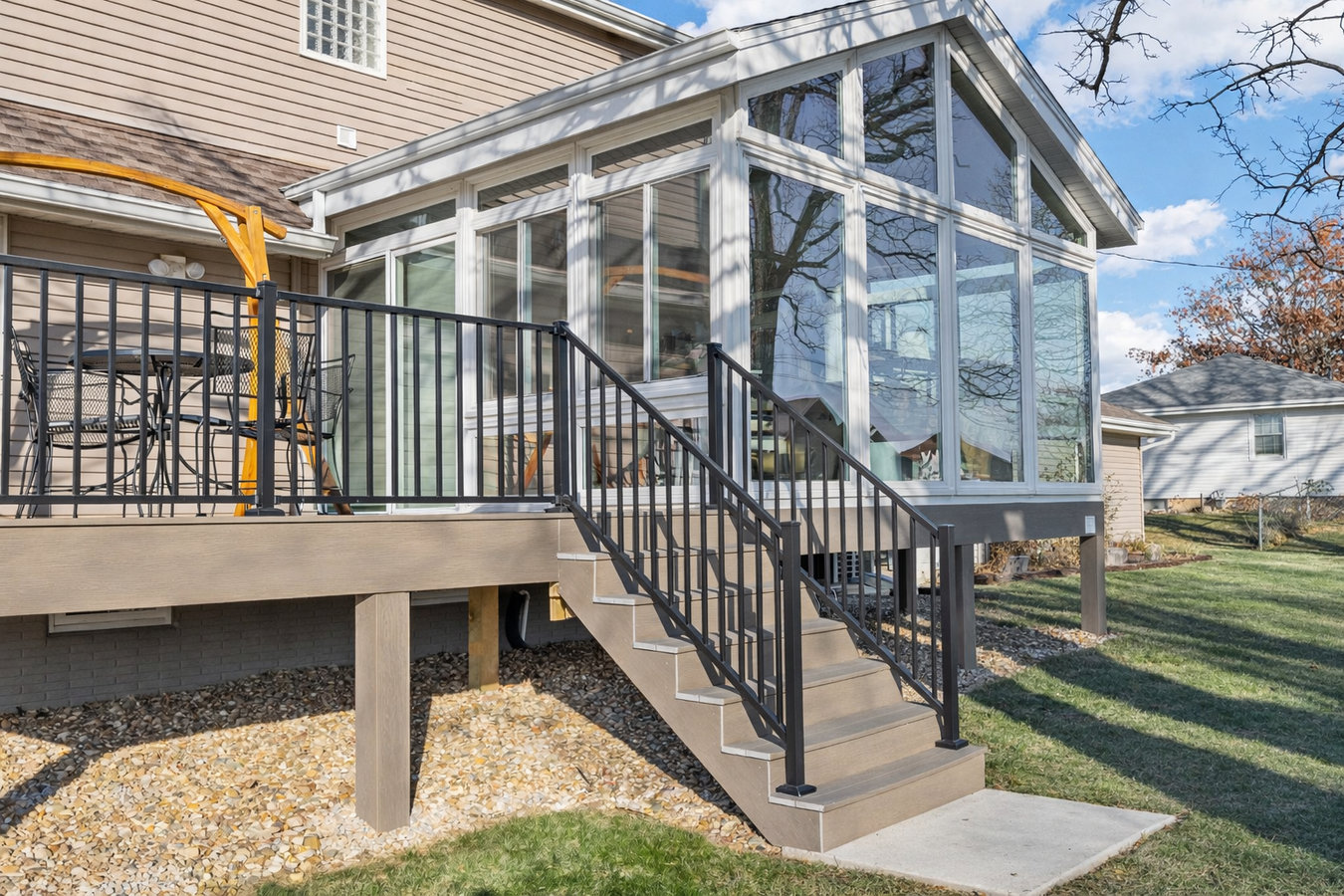
Your deck has the footprint. We add walls, a roof, and proper glass so it becomes a comfortable room you can use year-round - permitted, structurally sound, and designed for Southern California sun.
Your deck has the footprint. We add walls, a roof, and proper glass so it becomes a comfortable room you can use year-round - permitted, structurally sound, and designed for Southern California sun.
A deck-to-sunroom conversion in Garden Grove turns your existing outdoor deck platform into a fully enclosed, livable room - contractors assess the structure, reinforce the framing if needed, then build walls, a roof, and windows on top, with most projects running eight to sixteen weeks from contract to a finished room you can furnish and use daily.
Most homeowners who call us have a deck that is technically functional but not enjoyable - too hot, too exposed to the elements, or starting to show its age. Converting it stops the slow deterioration and turns a maintenance burden into a room. The key difference from a patio conversion is the structural assessment step: deck framing is typically not built to support a full enclosed room, so reinforcement underneath is a common first phase. If you are starting from a concrete slab rather than a deck, our patio-to-sunroom conversion page covers that approach in detail.
Every conversion we build in Garden Grove is permitted and inspected by the city. That documentation protects your investment - Orange County buyers and their lenders look closely at permit history, and an unpermitted addition can become a liability at the worst possible moment. We handle the permit application and coordinate with the city's building inspectors throughout the project.
Garden Grove's summer sun makes an exposed deck miserable for much of the day from June through September. If you find yourself wishing your deck had a ceiling and some shade every time you walk past it, that recurring thought is worth acting on. A sunroom with a proper roof and heat-blocking glass turns an avoided space into one of the most used rooms in your home.
If your deck boards are spongy, pulling away from the frame, or cracking along the grain, you are already facing a repair bill. Converting to a sunroom at the same time as a structural overhaul often makes more financial sense than patching an aging deck that will need attention again in a few years. A contractor can assess whether the existing structure is worth reinforcing or whether a new foundation approach is the smarter path.
In Garden Grove, an unpermitted structure can create real problems when you sell your home or make an insurance claim. If you already know - or suspect - that your deck was added without permits, converting it into a properly permitted sunroom is a way to bring the structure into compliance and add lasting value at the same time. Many homeowners who inherited unpermitted decks use a conversion to resolve the issue cleanly.
If you are replacing cushions, rugs, or furniture every year because Southern California's UV exposure destroys them, that money is going nowhere. A sunroom protects everything inside it from sun and rain, which means your furniture and decor last far longer. The enclosed space also stays usable on the occasional rainy winter day when an open deck is simply not an option.
The right type of room depends on how you plan to use it and how much comfort you want across different times of year. A three-season enclosure keeps rain and insects out and extends your usable outdoor living season - it is a good fit for homeowners who mostly want a shaded, ventilated space that still feels connected to the outdoors. A four-season room adds insulation, proper windows, and a heating and cooling connection - meaning you can use it as a genuine living space on any day of the year. Homeowners who want the full year-round living room experience often compare deck conversions alongside our all season rooms and our patio-to-sunroom conversion pages before deciding which approach fits their home best.
We handle the full project - structural assessment of the existing deck, permit application with the City of Garden Grove, framing reinforcement or replacement, window and glass installation, roofing, and interior finishing. If your deck needs significant structural work before walls can go up, we price that honestly in the initial estimate so you are not surprised mid-project.
Suits homeowners who want a protected, bug-free outdoor-feeling space for most of the year without a full HVAC connection.
Suits homeowners who want the room to function as a home office, flex space, or dining extension in every season, with built-in heating and cooling.
Suits homeowners whose deck framing is aging, undersized, or unpermitted and needs significant reinforcement before an enclosed room can be safely built on top.
Suits homeowners who want a specific roofline, glass configuration, or exterior finish that integrates cleanly with their existing Garden Grove home.
Garden Grove's housing stock is largely postwar - most homes were built between the 1950s and 1970s, and many have decks or patio additions that were tacked on in subsequent decades. These decks were often built as DIY projects or informal additions, without permits and sometimes without the structural depth to support a full enclosed room. That history means the structural assessment step is especially important for homeowners in this city. Before we quote a conversion, we look at what is actually underneath the deck - not just what it looks like from the surface. Homeowners in nearby Orange face similar conditions with their older housing stock and find that a thorough pre-build assessment prevents costly surprises.
California's seismic activity also shapes how we build. Garden Grove sits in a seismically active region, and California building code requires that new structures - including sunroom additions - be connected to the existing home in ways that can handle earthquake forces. This is not a reason to be alarmed, but it does mean the structural connections on your project will be more detailed than they would be in most other states. A contractor experienced in California construction builds this in automatically. Homeowners in Buena Park ask about seismic requirements regularly, and the answer is always the same: it is already part of how we frame and anchor every project.
You reach out by phone or through our contact form. We respond within one business day with a few basic questions - the size of your deck, what you want the room for, and whether you know if the deck was originally permitted. No commitment on either side at this stage.
We come to your home to look at the deck in person - checking the framing underneath, measuring the space, and noting anything that might affect design or cost. Within one to two weeks you receive a written estimate that breaks down what is included, what structural work if any is needed, and what the payment schedule looks like.
Once you sign a contract, we prepare plans and submit permit applications to the City of Garden Grove. If your neighborhood has an HOA, that architectural review runs in parallel - plan for four to eight weeks total for this phase. We handle the city paperwork; you handle the HOA submission with our support preparing the documents.
Construction starts with any structural reinforcement needed, then moves to framing, windows, roofing, and interior finishing. City inspectors visit at required stages throughout the build. The project closes with a final city inspection and a walkthrough with you to confirm every window, door, and finish is exactly as agreed.
We respond within one business day. No pressure, no obligation - just an honest conversation about what your conversion would involve and what it would cost.
(657) 722-4016Many Garden Grove decks were built informally - sometimes decades ago, sometimes without permits - and they were designed to hold people, not rooms. We check the framing underneath before we quote anything, so you know upfront whether reinforcement is needed and what it will cost. There are no mid-project discoveries that suddenly add thousands to your bill.
We submit the permit application to the City of Garden Grove, respond to any plan corrections, and schedule all required inspections. You are not left wondering where the approval stands. Every project we complete is fully documented and inspected - which matters in Orange County's real estate market, where buyers and lenders review permit history closely.
Garden Grove sits in a seismically active region, and California's building code requires structural connections that can handle earthquake forces - requirements that are stricter than most other states. We build to those standards on every conversion, not just when an inspector is watching. The California Seismic Safety Commission provides guidance on these requirements that we follow on every project.
We check in at each major milestone - permit approval, structural work completion, framing sign-off, and final inspection - so you always know where the project stands. You should not have to chase your contractor for an update while there is a crew in your backyard, and with us, you will not have to.
From the first structural assessment to the final permit document, every step of our process is designed to protect you from the surprises and delays that make renovation projects stressful. Garden Grove homeowners deserve a finished room built on a solid foundation - structurally, legally, and practically.
A fully insulated, climate-controlled room designed to be as comfortable in August as it is in December - built for homeowners who want a true year-round living space.
Learn MoreStarting from a concrete slab instead of a deck? We assess the slab condition and build a fully enclosed sunroom on the footprint you already have.
Learn MoreSpring books up quickly. Reach out today and we will respond within one business day with an honest scope and clear pricing.