
Loading...
Serving Garden Grove, CA and surrounding areas. (657) 722-4016
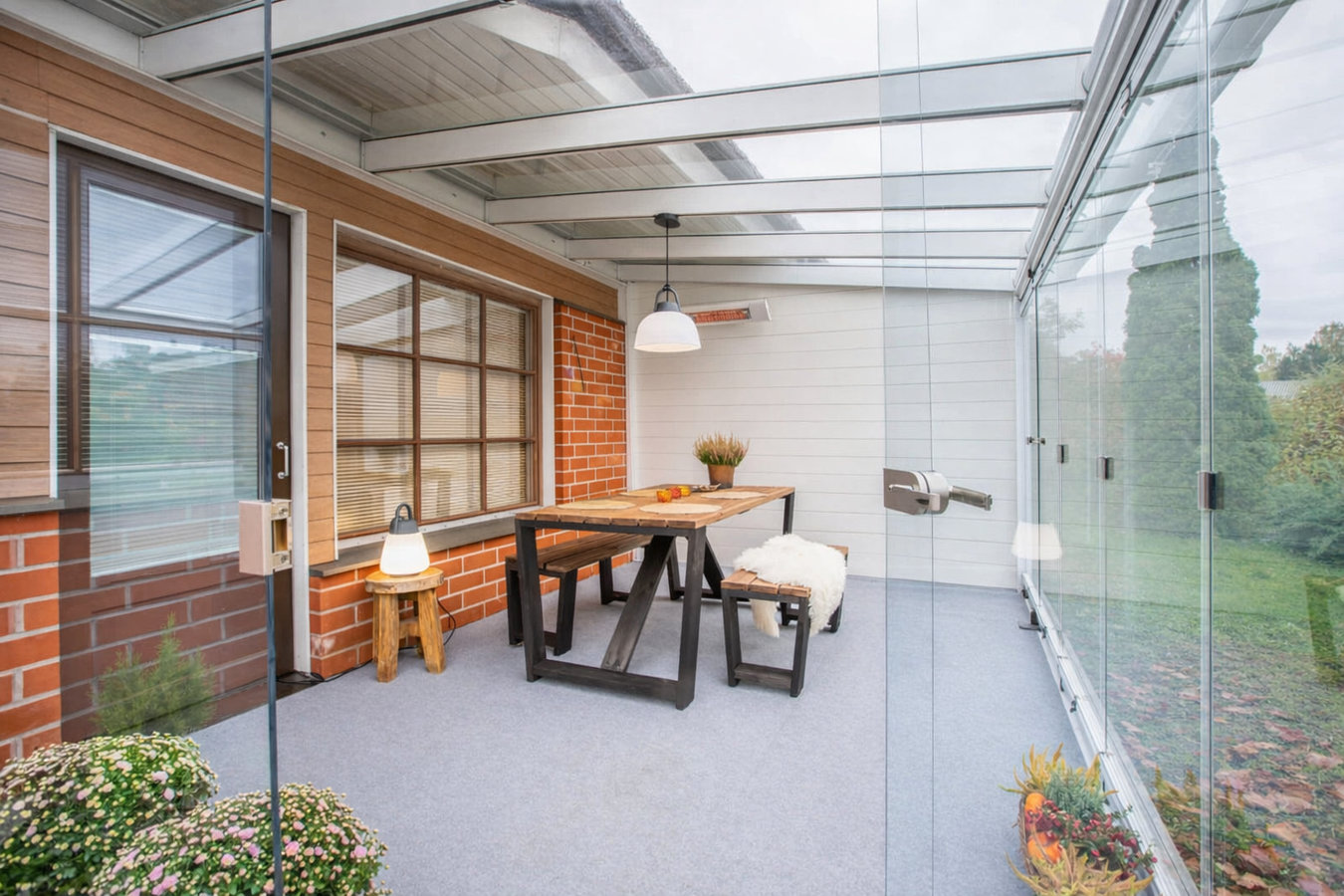
Garden Grove Sunrooms & Patios is a licensed sunroom contractor serving Costa Mesa, CA, specializing in enclosed patio rooms, sunroom additions, and patio cover installation for homeowners throughout the city since 2020. We understand how marine air, clay soil, and the city's postwar housing stock shape every project, and we respond to every inquiry within one business day.
Costa Mesa gets coastal fog and marine humidity through most mornings from May through August, and an open patio is damp and uncomfortable during those hours. A fully enclosed patio room with sealed glass and corrosion-resistant framing keeps the space dry and comfortable throughout the marine layer season, and handles the warm afternoon sun that follows it without turning the room into an oven.
Most Costa Mesa homes are single-story ranch houses built in the 1950s through 1970s with modest square footage and a concrete slab extending off the back of the house. That existing slab is the natural foundation for a sunroom addition that adds a finished, conditioned room without the complexity of building on new footings or expanding the home's front or side profile.
Costa Mesa's climate is mild enough that a well-built sunroom is genuinely comfortable twelve months a year, but achieving that requires insulated glass and a climate control system that handles both coastal humidity in the mornings and inland heat during Santa Ana wind events in fall. A four season sunroom with a properly sized mini-split handles both ends of that range without making the room feel like a utility space.
The Eastside and Mesa Verde neighborhoods both have homes with wide backyards and south or west-facing patios that get intense afternoon sun from June through September. A solid or lattice patio cover brings those outdoor spaces back into regular use during summer without the full cost of an enclosed room, and it is the right choice for homeowners who want to keep outdoor airflow and just need shade and rain protection.
Properties in Costa Mesa, sitting three miles from the ocean, accumulate enough salt air to visibly degrade standard aluminum framing systems within a few years. Vinyl sunroom frames contain no metal to corrode, hold their color without repainting, and stand up to the combination of marine humidity and direct UV exposure that coastal Orange County delivers year-round.
Costa Mesa winters are mild enough - rarely dropping below 45 degrees at night - that a three season sunroom is usable for roughly ten months of the year without active heating. This is a cost-effective option for homeowners who want more than a screen room but are not looking to build a fully conditioned space, and it works well on properties where the patio gets afternoon sun from the south or west and stays naturally warm through the cooler months.
Costa Mesa sits about three miles from the Pacific, and that distance is close enough to put every exterior surface under constant marine air exposure. Salt-laden moisture off the ocean does not announce itself the way ocean spray does - it works into caulk joints, seals, and metal framing quietly and steadily. Painted aluminum sunroom frames that look fine on inland Orange County jobs will show rust staining and surface chalking within a few years in this environment. Weatherstripping that lasts a decade in Garden Grove or Anaheim may need replacement in half that time on a Costa Mesa property. Contractors who source materials and price jobs the same way for coastal and inland sites tend to produce work that looks good at handoff and starts showing its limitations in the second or third year.
The housing stock itself creates a second set of considerations specific to Costa Mesa. The majority of the city's single-family homes were built between 1950 and 1979, which puts them in the 45-to-75-year age range. Homes in Mesa Verde and the Eastside often have original or near-original concrete slabs that have been through decades of the wet-dry cycles driven by Orange County's clay soils. Before new framing goes up, we assess the slab for signs of shifting or cracking that could affect the structure. Santa Ana wind events - which push hot, dry air across the area in fall - also matter: the same year-round moisture that keeps the marine layer present makes rapid humidity swings during wind events more pronounced for sealed glass assemblies, which is why ventilation design matters even in Costa Mesa's mild climate.
Our crew works throughout Costa Mesa regularly, and we understand the local conditions that affect sunroom contractor work here. We pull permits through the City of Costa Mesa Building Safety Division and are familiar with the plan check review process for residential additions in this city. Costa Mesa does not have pervasive HOA coverage the way some planned Orange County communities do, but specific subdivisions in Mesa Verde and parts of the Westside do have CC&Rs that affect exterior modifications, and we confirm that status before finalizing any design.
Costa Mesa has distinct neighborhoods that each have their own character. The Eastside, which borders Newport Beach, has older craftsman bungalows and cottage-style homes on smaller lots - projects there often require more careful attention to matching rooflines and exterior materials than the larger ranch homes in Mesa Verde. The area around South Coast Plaza and the Segerstrom Center for the Arts defines the city's commercial center, but residential streets just minutes from there are quiet and well established. Harbor Boulevard and Newport Boulevard are the main north-south corridors, and the 405 Freeway runs through the northern part of the city. We work throughout all of these areas.
For homeowners in Costa Mesa considering a sunroom or enclosed patio, the neighboring city of Santa Ana has a very different housing profile - older homes from the 1920s through 1940s with wood siding rather than the postwar stucco ranch stock common in Costa Mesa. We serve both cities and understand the different challenges each one presents. We also serve homeowners in Huntington Beach to the south, where coastal exposure is even more significant and material specifications need to be tighter for properties within half a mile of the beach.
Call or submit a contact form and we reply within one business day. We schedule an on-site visit at a time that works for your household - you do not need to take a day off for a preliminary conversation.
We visit your Costa Mesa property, assess the existing slab and structure, confirm your HOA status if applicable, and walk through design options. The estimate we provide covers materials, labor, permit fees, and a realistic project timeline - no surprise line items added later.
We file the permit application with the City of Costa Mesa Building Safety Division and begin construction once the permit is issued. We coordinate all required inspections - you do not need to track the permit or schedule inspectors yourself.
We walk through the completed space with you, confirm all finishes and hardware meet spec, and provide documentation of the closed permit. If anything needs adjustment, we handle it before we consider the job done.
We serve homeowners throughout Costa Mesa and respond to every inquiry within one business day. No pressure, just an honest estimate based on your specific property.
(657) 722-4016Costa Mesa is an Orange County city of roughly 115,000 people sitting about three miles inland from the Pacific coast. The city is known statewide for South Coast Plaza, one of the highest-grossing retail centers in the country, and for the Segerstrom Center for the Arts, home to the Pacific Symphony and major Broadway touring productions. These landmarks anchor the city's commercial center, but the surrounding residential neighborhoods are quiet and established. Costa Mesa has distinct areas - the Eastside borders Newport Beach and has some of the city's oldest homes, including craftsman bungalows from the 1930s and 1940s. Mesa Verde in the north features larger 1960s tract homes on generous lots. The Westside has older working-class housing and a more industrial character near its southern edge.
The residential housing stock in Costa Mesa is predominantly single-family homes built between the 1950s and 1970s - low-slung ranch houses and tract homes with stucco exteriors, concrete slab foundations, and attached garages. Roughly half of the city's housing units are renter-occupied, which is a higher share than many neighboring cities, but the owner-occupied half tends to be long-term residents who invest in maintaining and improving their properties. The OC Fair and Event Center, which hosts one of the largest county fairs in California each summer, sits near the center of the city and is a landmark almost every Costa Mesa resident knows well. Homeowners near Orange to the northeast or Santa Ana to the north will find that we serve those communities as well, though the housing profiles and permit processes in those cities differ meaningfully from Costa Mesa's.
Convert your existing patio into a fully enclosed sunroom space.
Learn MoreCall us today or submit a contact form and we will respond within one business day. Free estimates for all Costa Mesa homeowners - no obligation.